


Choosing a cosmetic OEM/ODM manufacturer is no longer a creative decision, but a strategic business decision. From a robust quality system and R&D capabilities to ethical sourcing, professional logistics services, and transparent business terms, every detail impacts compliance, cost, and scalability. The following decision checklist aims to help brands go beyond marketing promises and evaluate manufacturers based on what truly matters: actual results, performance, and the viability of a long-term partnership.
A. Key Audit Factors: Quality and Certification
By 2025, quality will no longer be subjective, but verifiable. If an OEM/ODM cosmetic manufacturer cannot demonstrate compliance with standards, they become a burden to the business.
Uncompromising Principles: GMP and ISO 22716
ISO 22716 is the gold standard for Good Manufacturing Practices (GMP) in cosmetics worldwide, covering hygiene, traceability, and equipment sterilization. Ausmetics holds valid ISO 22716 certification and has been audited by authoritative bodies such as ITS and SGS. Without this certification, you cannot legally sell your products in the EU.
Regulatory Compliance (FDA and MoCRA)
For the US market, the Cosmetic Regulatory Modernization Act (MoCRA) marks a significant shift. Under this act, OEM cosmetic manufacturers must now register their manufacturing facilities with the FDA.
Ethical Standards (Sedex/SMETA)
Retailers like Sephora and Disney require their supply chains to adhere to ethical standards. Sedex (SMETA) audits ensure factories maintain fair wage standards and safe, compliant working environments.
✅Decision Checklist: Quality Audit
Certification: Can you provide a valid ISO 22716 certificate and FDA registration number?
Audit: Do you have recent Sedex or SMETA ethics audit reports available for review?
Traceability: How do you handle the risk of cross-contamination with organic or hypoallergenic products?
B. Engine Room: R&D, Capacity, and Testing
Your cosmetic manufacturer should be a source of creativity, not just a pair of hands.
R&D Capabilities
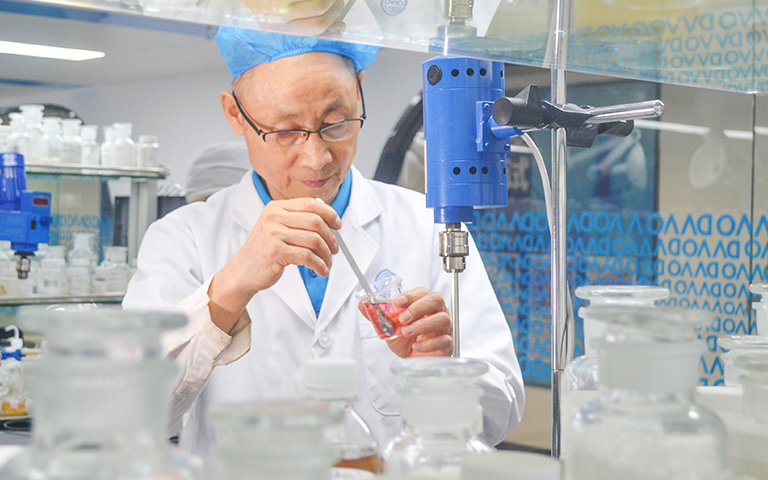
Top manufacturers invest in in-house laboratories. This enables:
Reverse Engineering: Replicating the texture of competitors' best-selling products.
Trend Adaptation: Quickly integrate popular ingredients like hyaluronic acid into hair care products (skinning the hair).
Safety and Stability Testing
Never overlook science. A strong partner will play the following roles:
Freeze-Thaw Testing: Ensures the product can withstand extreme conditions during transportation.
Microbial Challenge (USP): Proves the preservatives are effective against bacteria and mold.
Production Capacity
What is your company's current monthly/annual production capacity?
What types of brands are you currently working with at scale?
✅Decision Checklist: R&D & Capacity
Innovation: Does your company have its own laboratory, or does it outsource formulation development?
Testing: Is the Preservative Challenge Test (PET) included in your quote, or is it charged separately? Can you provide stability testing and preservative efficacy testing reports?
Scalability: What is the maximum monthly production volume for this specific packaging type? What types of brands are you currently working with at scale (startups, mid-sized brands, global retailers)? Who owns the intellectual property rights after formulation development is completed?
C. Beyond Products: Sustainability and Logistics
Sustainability is the entry barrier by 2025, while logistics is the key to profitability.
Environmental Solutions
Looking for skincare contract manufacturers capable of sourcing post-consumer recycled plastics or biodegradable packaging. Ausmetics supports the "Clean Beauty" standard, its formulas are free of over 1600 EU-banned ingredients, and it uses sustainable materials.
Global Logistics and Dangerous Goods
Cosmetic shipping is highly complex. Perfumes and aerosol products are classified as "dangerous goods," specifically Category 3 flammable materials. Your partner must have experience handling MSDS documentation and UN-certified packaging to avoid customs seizures.
✅Decision Checklist: Logistics and Ethics
Sustainability: Can you source recyclable polymerized packaging and verify its recycled ingredients? Do your formulas comply with EU cosmetic regulations?
Transportation: Do you have experience transporting dangerous goods? What international trade terms (FOB, DDP) do you offer? Can you prepare and manage MSDS/SDS documentation?
Export: Can you provide the documents required for my RP to submit the notification of EU citizenship and migration application (CPNP)?
D. Business Level: Costs and Commercial Terms
Cost Breakdown
Understand the cost breakdown to avoid hidden costs:
Bulk component: The liquid itself.
Packaging: Bottles, pumps, labels.
Labor and indirect costs: Filling and assembly.
Hidden costs: Mold/tooling fees, stability testing fees, and sample fees.
Understand the Minimum Order Quantity (MOQ)
Standard OEM: Typically 10,000 units due to machine setup.
Startup-friendly: "Partial order" (10,000 units produced, 5,000 units shipped first, then another 5,000 units shipped) or "consolidated order" (if day cream and night cream use the same bottle, the quantities of day cream and night cream are combined).
✅Decision Checklist: Business Strategy
Minimum Order Quantity: What are the average MOQs for private label and custom-formulated products?
Cost Breakdown: How are each cost itemized? Are mold fees and testing fees one-time or recurring expenses?
Terms and Conditions: What are your company's payment terms and delivery cycles for repeat orders?